



The Balkan country of Bulgaria rarely figures highly on the average itinerary for Jewish heritage travel in Eastern Europe. This is a pity because Bulgaria was one of the few European countries to rescue the majority of its Jewish citizens from the Nazis.
The fascinating story of Bulgaria’s two thousand year old Jewish heritage deserves to be more widely known and a trip to explore the Sofia synagogue, Jewish cemeteries, monuments, and old Jewish neighborhoods is a deeply rewarding experience.
Bulgaria, with its sunny Black Sea resorts, 10 UNESCO World Heritage Sites, world class museums and historical artifacts, and amazing food and drink, is also emerging as a luxury tourist destination. The Bulgarians are generally friendly and hospitable and American Jews can expect a warm welcome and a safe travel experience.
If you’re looking for a high end vacation that combines beautiful weather with Jewish heritage trips, tailored cultural activities – and some superb beaches – Bulgaria is a top destination. This post will tell you more about the rescue of the Bulgarian Jews in WWII and how to plan a tailored luxury tour of one of Eastern Europe’s best travel destinations with Gil Travel.
A Brief History of Bulgaria and Bulgarian Jewish heritage
The ancient lands that are now modern Bulgaria were home to sophisticated prehistoric cultures and were occupied in turn by the Thracians and Persians.
The Jewish history in Bulgaria begins with the arrival of the Romans and the incorporation of Bulgaria into the Roman Empire in 46 CE.
Jews established a strong presence in the province and were wealthy enough to build large and ornate synagogues during the second century CE. The Jewish presence survived the collapse of Rome and Bulgaria was part of Jewish mercantile networks across the region. Despite anti-Semitism in the fourteenth century, and a (relatively ineffectual) decree of expulsion, communities of Romaniote, and then Ashkenazi, and Sephardi Jews survived and prospered.
Bulgaria was conquered by the Turks in 1396 and remained part of the Ottoman Empire until 1878. Jews were generally tolerated within the Ottoman Empire and were allowed to practice Judaism without significant interference by the Turkish authorities. When Bulgaria became an independent nation under the terms of the Treaty of Berlin, the Jewish community enjoyed good relations with the state (headed by Tsar Ferdinand who even attended the inauguration of the Sofia Synagogue).
The Rescue of Bulgarian Jews in WWII
Bulgaria’s history in World War Two is complicated. The country was economically dependent on Germany and was menaced by the Soviet Union just a hundred miles away. As a conservative Christian monarchy, Bulgaria naturally feared and loathed communism and was pulled ever closer towards Germany and Italy’s sinister orbits. Initially neutral in WW2, Bulgaria was forced into the Axis bloc in 1941 when German troops massed on its borders demanding passage to Greece.
Although the Bulgarian government enacted a variety of anti-Semitic laws and actions (including the conscription of Jews and other minorities into labour battalions) there was little enthusiasm for Nazi style violence against the Jewish population. The Orthodox Church and other organizations protested against discrimination.
In 1942 as Germany unleashed the Holocaust, they demanded the transfer of all Bulgarian Jews to German custody. The Bulgarian government initially transferred 11 343 Jews from occupied Thrace, Macedonia and Pirot to Vienna. Only 12 of them survived the war. The rest were murdered.
As news spread of the deportations and the security forces prepared to deport Jews from inside Bulgaria itself, a wave of protest began. Opposition politicians, priests and intellectuals began to pressure the government forcing a halt to the planned deportations. Instead, the government forcibly dispersed 20,000 Jews from the capital Sofia to rural provinces under the pretext that they were required as conscripted labour. This arbitrary measure caused many injustices, but ultimately saved the lives of Bulgarian Jews, most of whom survived WW2.
Explore Bulgaria’s Unique Jewish Heritage
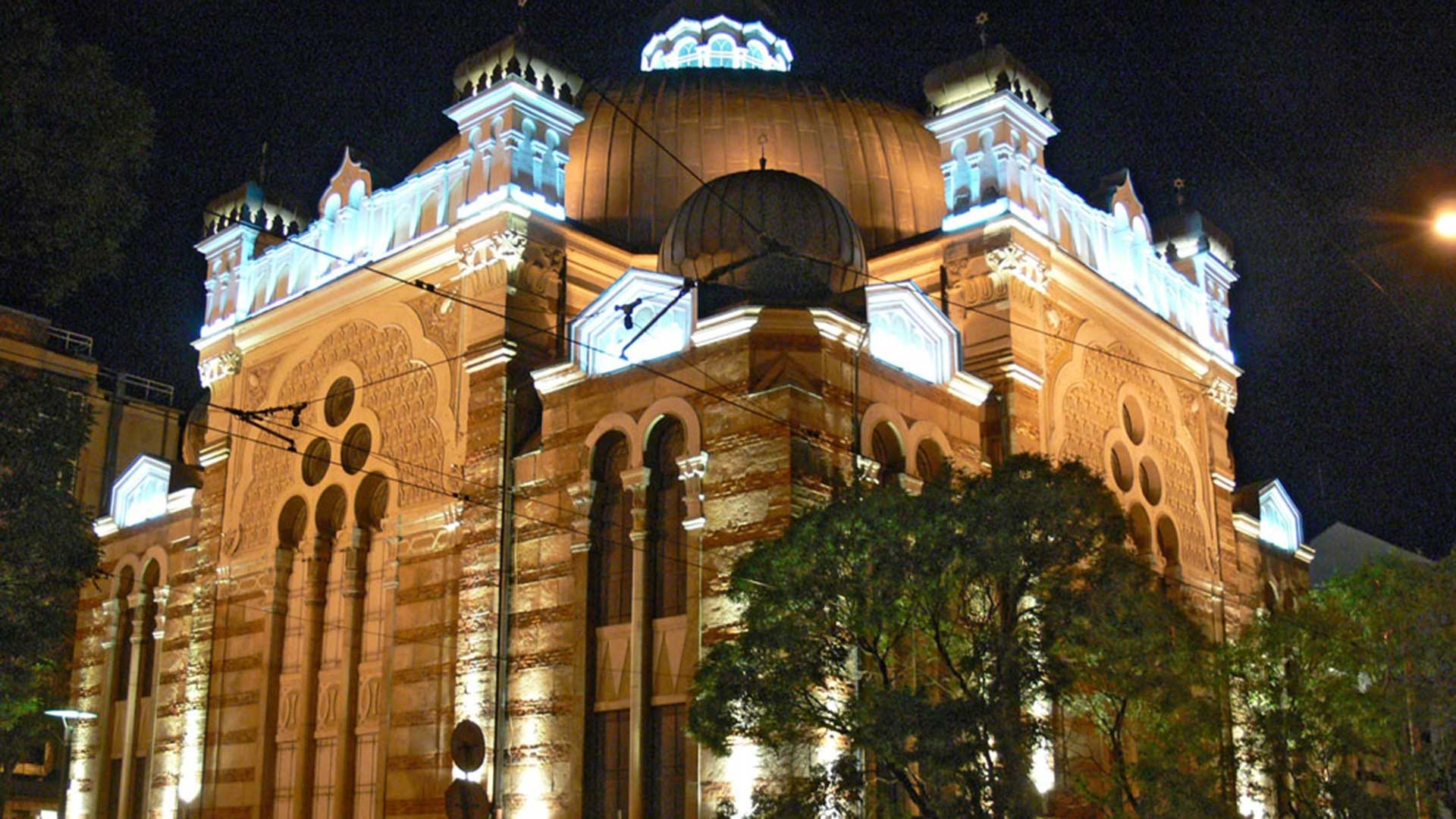
Bulgaria’s capital Sofia sits at the foot of the dome shaped Vitosha mountain and is the perfect place to begin a tailored heritage tour. The highlight of a visit to Sofia is the impressive Sofia Synagogue. The capital’s Romaniote Orthodox synagogue was completed in 1909 and is the largest synagogue in the Balkans. It was built during a time of optimism and growing prosperity and its design reflected the former confidence of Sofia’s Jewish community.
The Sofia Synagogue once served a community numbering thousands and can accommodate 1,300 worshipers. The interior of the synagogue is beautifully ornate, featuring a huge chandelier, exquisite mosaics and Italian carrara marble. The synagogue is still active today, but sadly hosts only a tiny core of regular worshipers.
Guests are welcome and Gil Travel may be able to arrange for you to attend a traditional Romaniote Orthodox service, or at least to meet with congregants. The synagogue also contains the Jewish Museum of History which exhibits Bulgaria’s unique wartime story and an interesting collection of Jewish artifacts.
Plovdiv Synagogue
The town of Plovdiv lies around 80 miles south east of Sofia and was once home to a thriving Jewish community. It’s famed for its beautifully restored synagogue that was once a focal point of community life. The Plovdiv Synagogue was built in 1892 in a location that had once been part of the old Ottoman era Jewish quarter of Orta Mezar. It’s one of the best surviving examples of an Ottoman style Balkan synagogue.
Plovdiv itself has a very long history and there have been Jews in the town since it was named Philippopolis during the Roman period. The Plovdiv synagogue is a direct spiritual successor to the ancient synagogues that existed when Bulgaria was a Roman province.
The exterior of the Plovdiv Synagogue gives no hints at all of the beautiful and ornate decoration of the interior. The inside of the synagogue is decorated in green and blue Moorish-style geometric designs and is dominated by a large Venetian chandelier and an elaborate painted dome. The decorations have aged and faded but must have been truly spectacular in the synagogue’s heyday.
Bulgaria’s Non-Jewish Cultural Treasures
Bulgaria has a history that goes back to the stone age and there is a huge amount of historical and archaeological sites to explore. Gil Travel can work with you to create a customized itinerary that suits your own interests and available time, but there are a few “must-see” sites that you definitely shouldn’t miss.
Rila Monastery
The Rila Monastery is one of Bulgaria’s UNESCO World Heritage Sites. The massive monastic complex is set in a mountain valley amidst some stunning scenery and is a wonderful example of eastern Orthodox religious architecture. It’s very difficult to do the Rila monastery full justice in a short article, but its ornate decorations are spectacular. Whatever your religion, you’ll be impressed and a little awed by the living history present in this functioning monastery that is home to 60 monks. The Rila monastery also has an interesting museum.
Veliko Tarnovo
Veliko Tarnov, also known as the City of the Tsars, holds a special place in Bulgarian cultural heritage. It was the country’s medieval capital and is still a stunning hillside town (the old city is actually built on three hills). Veliko Tarnovo is a place of palaces, churches and the fort-like patriarchal cathedral. A private walking tour of the town is a memorable experience and provides an excellent insight into a lost Balkan world.
Sunny Beach or Varna
If you’re looking for some sea and sun, the aptly named Sunny Beach offers 8km of golden sands and warm seas with all the amenities of a luxury resort. It’s a great place for watersports, or just lounging with a good book or a podcast and relaxing. Gil Travel can arrange kosher-friendly luxury accommodation and there are plenty of family activities if you’re traveling with kids.
Varna is a port on Bulgaria’s Black Sea coast that is popular with holidaymakers. It has all the attractions of Sunny Beach but offers more sophisticated cultural activities for people who want a balance between beachtime and the chance to explore Bulgarian history, art and music. The city also has some great museums and there are a number of festivals during the warmer months.
Plan a Luxury Jewish Tour of Bulgaria
Gil Travel has extensive experience arranging luxury Jewish travel experiences across Eastern Europe. Jewish tours to Bulgaria are increasingly popular with American Jews who want to broaden their knowledge of European Jewish history and explore one of the most fascinating countries in the Balkans.
If you want to discover more about Bulgaria’s rich Jewish heritage and create a customized trip that includes the chance to visit synagogues and meet local Bulgarian Jews, talk to Gil Travel today.
Frequently Asked Questions
Is Bulgaria a safe destination for Jewish travelers?
Yes. Bulgaria is considered a safe and welcoming destination for Jewish visitors. The country has a long tradition of coexistence and generally low levels of antisemitic incidents, particularly in major cities such as Sofia, Plovdiv, and Varna. Jewish sites, including synagogues and museums, are well maintained and openly accessible. American Jewish travelers can expect a respectful reception, good infrastructure, and a comfortable travel experience, especially when traveling on a privately arranged tour.
Is the Sofia Synagogue open to tourists?
Yes. The Sofia Synagogue is open to visitors most days and welcomes tourists interested in Jewish history and architecture. As it remains an active synagogue, access may be limited during services and Jewish holidays. Modest dress is required. The visit typically includes the synagogue interior and the adjacent Jewish Museum of History, which provides essential context on Bulgarian Jewish life. With advance coordination, it is sometimes possible to attend services or meet members of the local community.
Are there kosher restaurants in Sofia?
Yes. Sofia has dependable kosher dining options supported by the local Jewish community. Kosher Bulgarian cuisine combines Sephardi and Balkan influences and emphasizes fresh, flavorful ingredients. On a private luxury tour, Gil Travel can arrange kosher restaurant meals, catered dining, or community-based kosher experiences, allowing observant travelers to enjoy local food without compromising dietary standards.
What’s the best time to visit Bulgaria?
Late spring and early autumn bring comfortable temperatures and fewer crowds, which is ideal for walking tours and sightseeing. If you want to enjoy the Black Sea beaches, summer is fantastic. You can also combine a tailored Bulgarian tour with Jewish heritage tours of Budapest or a trip to explore Jewish sites in nearby Transylvania or Thessalonika.