




Luxury Jewish heritage tours in Latvia open a window to a lost world of Baltic Jewry, and a country that produced one of Europe’s most modern and sophisticated Jewish cultures. Latvia’s stunning capital Riga was once home to a thriving pre-war Jewish community. Eight decades after the Holocaust ended, Riga offers a poignant story of devastation, loss, and finally hope and renewal.
A Quick Guide to Latvia
Latvia is a small Baltic nation roughly the size of West Virginia. It lies alongside the Baltic Sea, nestled between Lithuania and Estonia and faces out across the water towards Sweden and Finland. Latvia has been a member of the EU for over twenty years and uses the euro (€) as its currency. It’s a modern and welcoming country where Americans can feel safe, and the capital Riga is an important destination on a Jewish tour of the Baltic region.
The Jewish History of Riga
There have been Jews in Latvia for at least 450 years, with some evidence of Jewish travelers and merchants entering the region during the 1300s – when it was still considered a fairly wild and remote place on the fringe of Europe. The key date in the history of Latvian Jewry is 1571 when Jews established a colony at Piltene in the Courland region.
The history of the Baltics was turbulent to say the least. Jews endured the ravages of the Northern War (1700-21), 18th century Russian annexation and anti-Semitism, the chaos of World War One, and then Soviet and Nazi occupation in quick succession. Jews came face to face with the horrors of Stalin’s deportations to Siberia, and then the Holocaust.
The Jewish history of Riga was marked by restrictions and expulsions, alternating with periods of relative tolerance and official protection. The city’s Jewish community had a reputation as pragmatic merchants and artisans and Riga never matched Lithuania’s capital Vilnius as a religious and cultural center.
The real golden age of Latvian Jewry blossomed in the inter-war period and was tantalisingly brief. When Latvia gained independence from Russia in 1920, the government guaranteed Jewish rights in law and promoted official tolerance. The community began to flourish. Movements like Betar and Jewish educational organisations were established, including Hebrew speaking schools, and the Zionist movement gained in influence. The cultural scene expanded to include a music school, a Jewish theatre and drama groups, libraries, publishing houses; all the facets of a sophisticated and cosmopolitan society.
The Destruction of the Latvian Dream
When the Soviet Union invaded the Baltic states in 1940, around 6,000 Jews were quickly targeted by the secret police for deportation and Jewish institutions were closed. This was simply a prelude to the savagery that followed in 1941 when the Nazis conquered Latvia and the Einsatzgruppen were turned loose. Approximately 70,000 Jews were murdered out of a pre-war population of 93,000.
Following the defeat of the Germans, Latvia was again occupied by the Soviets. This new communist period was a time of stagnation for surviving Latvian Jews. There was some emigration to Israel and conversely, high levels of intermarriage and assimilation. By the collapse of communism there were 23,000 Jews in Latvia, today there are around 8,000.
Explore the Jewish History of Riga
Riga is a beautiful city that is one of Europe’s great cultural centers. Decades of obscurity behind the Iron Curtain meant that Riga is still not as well-known in the US as capitals like Paris and Berlin, but there are some real treasures to explore. A Jewish tour of Riga begins with a visit to the site of the old Jewish quarter of Maskavas Forštate or Moscow Suburb. It was renamed the Latgale neighborhood and is known for its eclectic mixture of architectural styles, including historical wooden houses, brutally utilitarian Soviet buildings, and beautifully ornate churches.
The Maskavas Forštate (so called because it was situated on the main highway from Riga to Moscow) was once the center of Jewish life in the city. When the Germans conquered Latvia, they turned the neighborhood into the Riga Ghetto. The modern Riga Ghetto Museum includes a preserved wartime house on Maza Kalnu Iela 21a. It was just one of the ghetto buildings where 30,000 Jews were forcibly confined – sometimes a dozen people to a single room – before being murdered in the Rumbula Forest or deported to the camps.
In 1941, Rumbula was a quiet railway station about seven miles south of the Riga Ghetto. It was located in pleasant pine woods, with a deeper forest center, whose soft sandy soil was ideal for digging mass graves. In the space of two terrible days, 25,000 Jews were shot dead and buried in the forest. The Rumbula Memorial is built on the site of the massacres. It is a simple and stark arrangement of stones and a metal sculpture of a menorah. A visit to the memorial is a poignant experience, but is an essential part of an exploration of Jewish Latvia.
The Riga Ghetto Museum
Established in 2010, the Ghetto and Holocaust Museum does an excellent job of preserving Riga’s pre-war Jewish history and educating new generations about the devastation of the Latvian Holocaust. 70,000 Jewish victims of the Nazis are honored on the Wall of Names. The murder of the Baltic Jews is perhaps a less well-known aspect of the Holocaust. The Riga Ghetto Museum is playing an important role in commemorating the dead and ensuring that their stories are not forgotten. It’s important to note that many of the museum’s exhibits are outdoors and the weather may be a consideration when you plan your trip.
A private guided tour of Riga’s Jewish past includes a visit to the ruins of the Great Choral Synagogue that was destroyed by the Nazis in July 1941. Most of the city’s synagogues were burned to the ground as part of a wave of violence involving Latvian fascists and German occupiers. The arsonists were forbidden to destroy the Peitav Synagogue due to the risk of fire damage to adjacent buildings, and – despite major vandalism – it survived the war. It is the only pre-war synagogue in Riga that is still an active place of worship and is an important part of Latvian Jewish heritage and the wider Jewish history of the Baltics.
.
The Peitav Synagogue was built in the very early 1900s in an odd mixture of Art Nouveau and Egyptian Revival styles that succeeded in creating a beautiful house of worship. The renovated synagogue is the center of Jewish religious life in Riga and welcomes visitors from abroad. The Peitav is located in the Vecrīga or Old City of Riga and is a wonderful stop on a walking tour. The other hub of modern Jewish life in Riga is the Jewish Community Center (JCC).
Gil Travel can arrange a visit to the JCC and meetings with members of the city’s Jewish community, as well as the chance to attend cultural and community events. After the horrors of the 1940s and the drab stagnation and restriction of the communist period, Jewish life in Riga is renewing and reviving, and is beginning to rediscover its pre-war sophistication and confidence.
Non-Jewish Sites in Riga
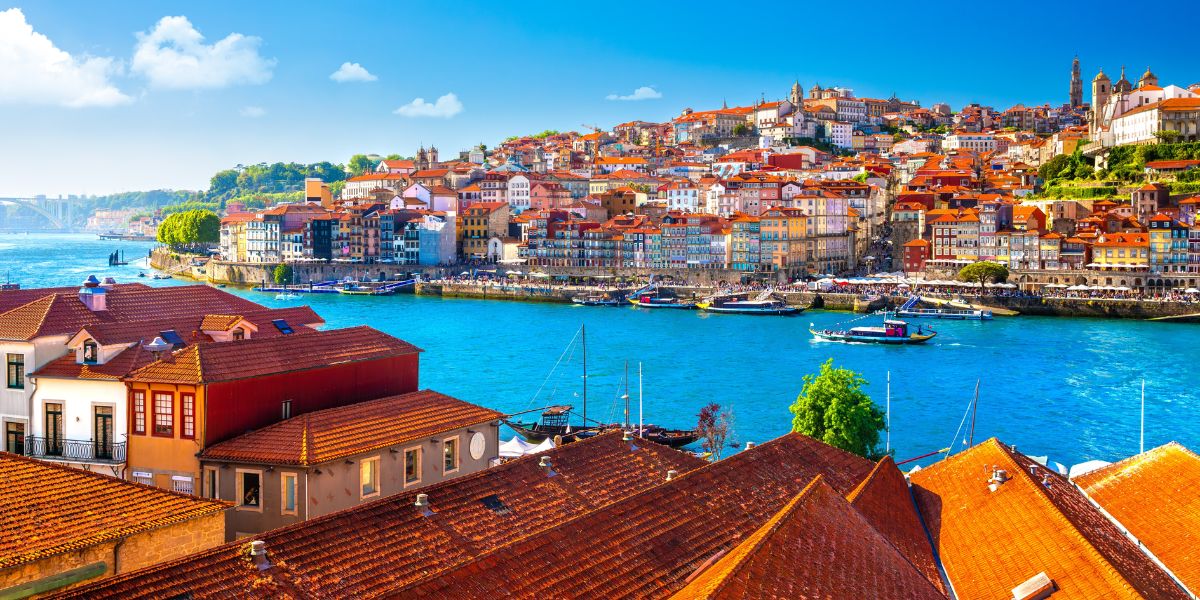
Jewish heritage tours in the Baltics bring the added benefit of a chance to see some of the world’s least-known but most exciting non-Jewish cultural treasures. Beautiful and historical cities are two a penny in Europe, but few qualify as UNESCO World Heritage Sites in their own right. The entire Historic Centre of Riga does, and it is an amazing place!
Riga was also awarded the title of European Capital of Culture in 2014 and is packed with churches, museums, galleries and historical buildings. If your idea of a good time is wandering through medieval streets with Gothic spires and squares, soaking up culture and browsing high end craft stores – or sitting quietly in a bar or cafe and watching the people – you will love the Old Town of Riga.
There isn’t enough space in this article to even begin to list the museums and historical sites in the Historic Center of Riga, but Gil Travel can work with you to create a custom itinerary that reflects your own personal interests and creates a truly memorable trip. This can include the famous Art Nouveau District (arguably the best in the world) and a Baltic kosher dining experience.
If you want to get out of the city for a complete change of scenery, which is sometimes a good idea after visiting the Ghetto and Rumbula, a visit to the Baltic coast is a charming break. Jurmala Beach is a 15 mile strip of pristine sand, shallow waters and a backdrop of sunny pine forests. Gil Travel can organize a full excursion, including kosher picnics and even watersports.
FAQs:
1. Is the Riga Ghetto Museum free to visit?
Yes, but any donation that you can afford will help to further the work of the museum and create a permanent testimony to the Latvian Holocaust and the preservation of the memory of murdered Latvian Jews.
2. Are there kosher restaurants in Riga?
Yes, there is a small number of good kosher restaurants, as well as a Chabad House. Riga also has kosher food stores and with a little planning, you can enjoy some amazing kosher Baltic food.
3. What’s the best season to visit Latvia?
The best time for pleasant weather is late spring to early fall. There are some superb festivals in summer (as well as up to 17 or 18 hours of daylight every day), and traditional Christmas markets in December.
4. How active is Riga’s Jewish community today?
There are about 7,000 Jews in Latvia today, mostly in Riga. That is only about 10% the size of the pre-war community, but there is a new vitality and self-confidence that bodes well for the future.